OSHA Safety Colors for Commercial and Industrial Painting
Color in an industrial facility isn't always selected for appearance. It can also communicate information about hazards, equipment and designated areas throughout the workplace. But which safety colors are actually required by OSHA? What do red and yellow indicate? And when is a facility's color-coding system based on its own safety procedures rather than a specific OSHA requirement? Understanding these distinctions is helpful when safety markings are part of a commercial or industrial painting project.
OSHA Safety Colors and Facility Identification
OSHA's safety color standard, 29 CFR 1910.144, establishes specific uses for red and yellow in general industry. Red is designated for certain danger and emergency-stop applications, while yellow is used to indicate caution and physical hazards such as tripping, falling or striking against something.
OSHA also addresses accident-prevention signs separately under 29 CFR 1910.145. For example, caution signs use yellow and black, while safety instruction signs use green and white. These requirements apply to safety signs and should not be interpreted to mean that every wall, column or piece of equipment associated with a safety function must be painted those colors.
Not every color used for safety identification within an industrial facility is specifically required by OSHA. Facilities may establish additional color-coding systems based on other applicable standards, their operations and their own safety procedures. For example, OSHA requires portable fire extinguishers provided for employee use to be mounted, located and identified so they are readily accessible, but it does not require a nearby wall or column to be painted red.
Does OSHA Require Every Safety Area to Be Painted a Specific Color?
Not necessarily. OSHA establishes specific color requirements for certain hazards, equipment and safety signs, but it does not prescribe a paint color for every type of safety equipment or location within a facility. For example, OSHA requires portable fire extinguishers to be located and identified so they are readily accessible, but the standard does not require the surrounding column or wall to be painted red.
Facilities may use additional color coding to make equipment locations easier to identify or as part of their established safety procedures. Those facility-specific markings should still be documented before repainting begins.
Safety Identification Can Be Part of the Painting Scope
Columns, walls, floors and other painted surfaces may be incorporated into a facility's identification system. For example, designated columns may be painted to help distinguish locations for fire extinguishers, eyewash stations or other equipment. OSHA requires suitable eyewash or drenching facilities within the work area for immediate emergency use when workers may be exposed to injurious corrosive materials. The regulation itself, however, does not prescribe a specific paint color for identifying those stations.
That distinction matters when planning a repaint. Contractors need to understand which markings are regulatory requirements and which are part of the facility's established identification system.
Planning Commercial Painting Around Facility Requirements
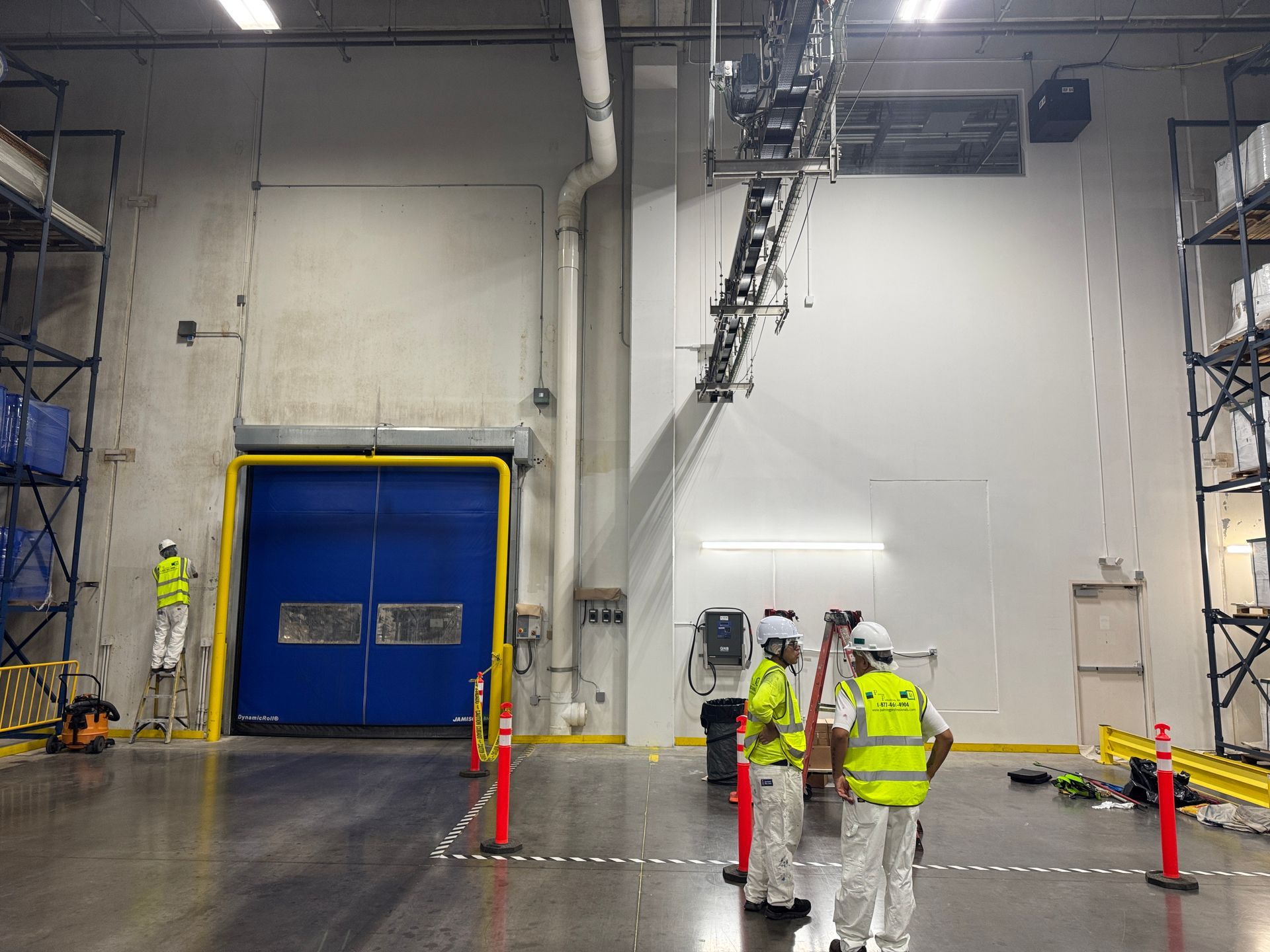
Before commercial painting begins in an industrial environment, existing safety markings should be identified and included in project planning. Painting over, changing or relocating a color-coded area without understanding its purpose could interfere with an established facility system.
At Painting Professionals, we account for these details when planning industrial painting projects, working with facility teams to maintain required and established safety markings as part of the overall painting scope.