
How Smarter Surfaces Are Changing Commercial Painting

August 14, 2026

Commercial coatings are becoming more specialized, with products engineered to solve specific problems within a facility. Depending on the application, coatings can provide increased resistance to scuffs, stains, moisture, chemicals and corrosion, while others are formulated to withstand frequent cleaning or help reduce heat absorption.


These products are creating what the industry often refers to as “smarter surfaces.” For facility managers and property owners, that means coating selection can play a larger role in how a building functions and is maintained. Choosing a coating based on the conditions it will face can help surfaces withstand daily use, protect the underlying material and remain serviceable longer.


What Makes a Surface "Smarter"

A smarter surface begins with selecting a coating designed to address the specific demands of its environment. Instead of choosing paint based primarily on color and finish, businesses can consider what they need the surface to withstand or accomplish.


In high-traffic commercial spaces, that might mean coatings engineered for greater resistance to scuffs, stains and repeated cleaning. In industrial facilities, it could mean protective coatings designed to withstand chemicals, abrasion, moisture or corrosion. Other specialized products offer features such as heat reflectivity, enhanced moisture resistance or antimicrobial properties that help protect the coating itself from microbial growth.


Facility Maintenance

For facility managers, smarter surfaces can make routine upkeep more manageable. In busy corridors and common areas, a coating that tolerates repeated cleaning and resists scuffs can keep walls presentable longer. Floors may need to withstand foot traffic, equipment or chemical exposure, while exterior surfaces face moisture, sunlight and changing weather. Matching the coating to those conditions can help prevent premature wear and unnecessary repainting.


However, not every high-performance coating is necessary or appropriate for every facility. A product with impressive features provides little value if those features do not address a problem the building actually faces.


Professional Evaluation Still Matters

Specialized coatings perform best when they are matched to the conditions they were designed to handle. Moisture, direct sunlight, chemical exposure, heavy traffic and frequent cleaning can each call for different properties in a coating. The existing surface also has to be evaluated and properly prepared before anything is applied. This is where an experienced commercial painting contractor can help separate useful performance features from ones a facility may never need.


Getting More From Commercial Surfaces

Smarter surfaces are changing the conversation around commercial painting. The question isn’t simply which product looks best, but which one makes sense for the way a facility operates. A coating that addresses the actual wear, exposure and maintenance demands of a surface can make a noticeable difference in how that surface performs and how often it needs attention.
By Amber Hollier • October 30, 2026
Commercial and industrial painting share certain application principles, but industrial coating projects involve additional technical requirements related to substrate conditions, environmental exposure, and operational demands. Handling industrial coating projects in-house may seem like a practical way to reduce maintenance costs. However, protective coatings must meet specific performance criteria that require specialized knowledge of surface preparation, application techniques, and inspection procedures. Without that expertise, the risk of premature coating failure and additional expenses can outweigh the attempted savings. Surface Preparation and Coating Adhesion Industrial coating systems depend heavily on substrate preparation. Steel, concrete, and previously coated surfaces require different preparation methods to achieve proper adhesion. Abrasive blasting, mechanical cleaning, and contaminant removal are frequently specified according to AMPP standards. Surface profile, soluble salt contamination, and existing coating conditions must also be evaluated before application. Inadequate preparation can contribute to adhesion failure, blistering, corrosion, and premature coating deterioration. Environmental Conditions and Application Requirements Temperature, humidity, and dew point influence coating application and curing. For facilities requiring industrial painting in Houston, the region's high humidity presents additional considerations, particularly when condensation develops on steel surfaces. Industrial coating specifications establish acceptable environmental conditions, mixing requirements, application thicknesses, and curing intervals. Applicators must monitor these variables throughout the project rather than relying solely on visual assessments. Wet-film and dry-film thickness measurements also help verify that protective coatings meet specified requirements. Specialized Training and Workforce Qualifications Industrial coating application requires familiarity with technical specifications, specialized equipment, safety procedures, and quality-control practices. According to the Associated General Contractors of America's 2026 Workforce Survey, 50% of responding construction firms reported that available candidates lacked the necessary skills, certifications, or licenses for industry positions. Although this statistic represents the broader construction industry, it highlights the importance of workforce qualifications in technically demanding trades. Industrial painting crews may also encounter confined spaces, elevated structures, hazardous materials, and active manufacturing environments requiring additional training and coordination. The Financial Impact of Proper Coating Application Protective coatings contribute to corrosion management by limiting exposure to moisture, chemicals, and other environmental conditions that accelerate substrate deterioration. NACE International's IMPACT study estimated that 15% to 35% of global corrosion costs could be avoided through available corrosion-control practices. Coating selection, surface preparation, and application quality are important considerations within a comprehensive corrosion management program. Deficiencies in these areas can lead to premature maintenance requirements, additional repairs, and operational disruptions. Choosing an Experienced Industrial Painting Contractor Facility managers considering commercial painting in Houston should distinguish between routine repainting and projects requiring specialized protective coating systems. Substrate conditions, chemical exposure, operating temperatures, and inspection requirements can significantly influence contractor qualifications. Painting Professionals provides commercial and industrial painting services throughout Houston, Dallas, and surrounding Texas markets. Our team works with facility owners and managers to address coating requirements, surface preparation, and application needs across commercial and industrial environments. Contact Painting Professionals to discuss your facility's upcoming painting or protective coating project.
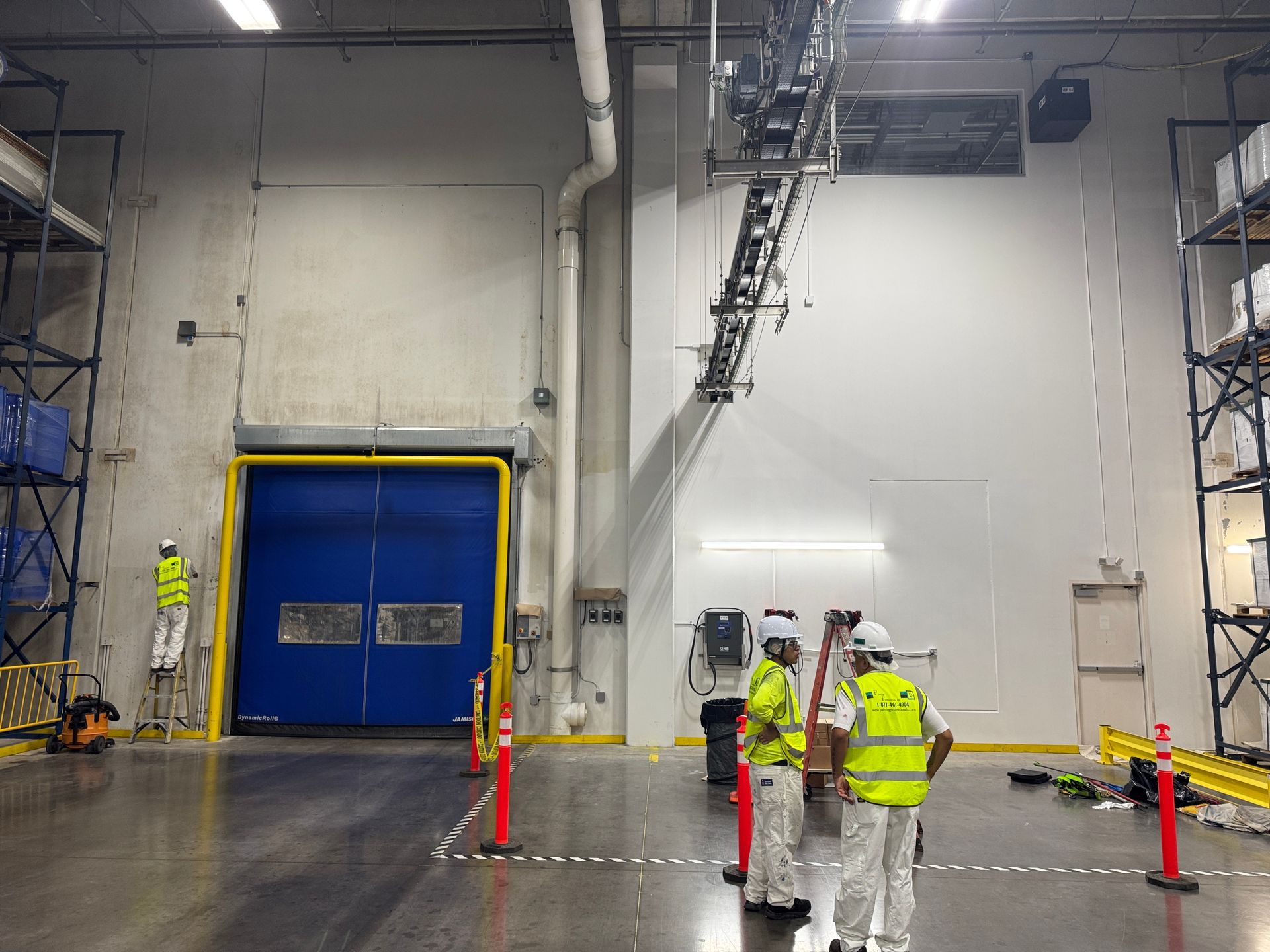
Preparing to apply industrial wall coatings inside a Houston food storage warehouse.
October 16, 2026
Protect food storage facilities against moisture damage and microbial growth with specialized industrial coatings and surface treatments in Houston.