Industrial Painters: The Importance of Surface Prep and a Proper Clean
Industrial painters rely on a solid foundation of industrial cleaning in order to achieve a flawless and long-lasting finished project.
The process of industrial cleaning involves a variety of surfaces in commercial settings that require specific approaches to effectively prep the area. This often includes the process of pressure washing exterior walls and chemical treatments for machinery.
Industrial painters should invest ample time and effort into their prep work, as doing so protects the underlying structure, making it a high priority for quality industrial painting projects.
Understanding Industrial Cleaning
Defining Industrial Cleaning
Industrial painters utilize techniques tailored to different environments and surfaces. Because industrial settings often harbor unique contaminants like grease and other residues, this requires special attention. What works for a retail store may not be suitable for a manufacturing facility. Professional industrial painters assess each site’s unique needs and proceed accordingly.
Industrial cleaning makes for better paint adhesion, resulting in longer-lasting finishes. It improves the overall look of the building by creating a uniform surface for painting and reduces the risk of paint failure that could lead to costly repairs down the line.
Essential Industrial Cleaning Techniques for Industrial Painting Projects
Pressure Washing: The Power of Water
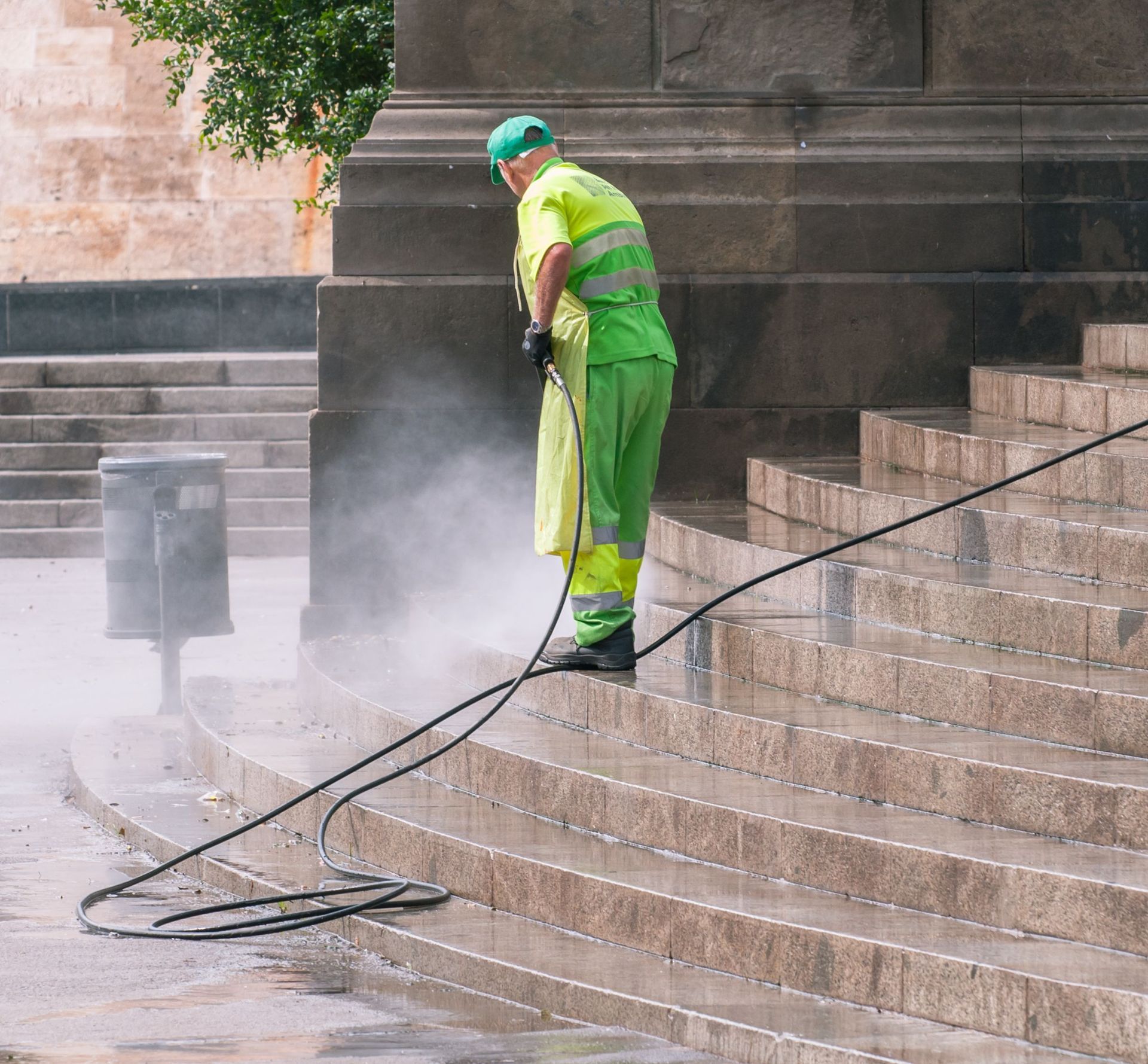
Pressure washing is a cornerstone for surface preparation in industrial cleaning. Industrial painters are able to adjust their pressure washing settings to accommodate various materials, from sturdy concrete to delicate metal siding. The choice between hot and cold water washing depends on specific cleaning needs, with hot water excelling at removing grease and oil.
Chemical Cleaning: Tackling Tough Contaminants
Industrial environments often require robust chemical cleaners to address persistent contaminants. These solutions are formulated to combat grease, oil, and industrial residues that conventional methods struggle to remove. Proper dilution and application are of upmost importance in order to minimize potential surface damage. Post-cleaning neutralization processes protect surfaces from lingering chemical effects, and proper disposal of chemical waste ensures compliance with environmental regulations.
Surface-Specific Industrial Cleaning Approaches
Metal Surface Preparation
Proper cleaning of metal surfaces includes degreasing techniques that effectively remove oils and contaminants from machinery and structures. When tackling rust, professionals choose between chemical and mechanical removal methods, each with their own advantages.
After cleaning, acids are neutralized in order to prevent corrosion. Phosphatizing processes can enhance paint adhesion on metal surfaces. For specialized materials like aluminum and galvanized surfaces, there are other special cleaners to be utilized.
Concrete and Masonry Cleaning
Concrete and masonry require unique approaches. Acid etching is often used on smooth concrete floors to create a better surface for paint adherence. Efflorescence, a common issue with masonry, demands specific removal techniques for a clean substrate.
Brick and stone facades benefit from tailored cleaning methods that preserve their integrity while preparing them for painting. After cleaning, moisture testing is completed in order to prevent future issues. Addressing mold and mildew on porous surfaces is an additional step worth taking to achieve long-lasting results.
Ensuring Safety and Compliance with Industrial Painters
Regulatory Considerations
Safety and compliance is paramount for industrial painters. OSHA guidelines provide a framework for safe practices, while EPA regulations govern chemical use and disposal. Local environmental laws dictate wastewater management procedures, and proper handling and storage of cleaning materials prevent accidents and contamination.
When it comes to proper surface preparation through industrial cleaning, Painting Professionals, Inc., doesn't cut corners. Our industrial painters couple their experienced and professional cleaning techniques with exceptional painting to deliver outstanding results for every project. You can trust to provide you with solutions that protect your surfaces, beautify your property, and extend the life of your investment. Contact us today to learn how we can begin your next industrial painting project!