Why Commercial Painting Matters More as Insurance Costs Rise

May 14, 2026

Commercial property owners across Texas and the Gulf Coast are facing a difficult reality: insurance premiums continue to rise as severe weather events become more frequent. Between hurricanes, hailstorms, flooding, prolonged heat, and extreme UV exposure, insurers are reevaluating property risk and aging or poorly maintained buildings are receiving greater scrutiny than ever before.


For many property owners and facility managers, the question is no longer: “Can we afford preventive maintenance?” It’s becoming: “Can we afford to delay it?”


As operating costs continue climbing, commercial building maintenance is shifting from a reactive expense to more of an asset protection strategy. And one of the most overlooked, yet most effective, ways to protect a commercial property is through proactive commercial painting and protective coating maintenance.


Rising Insurance Costs Are Changing Maintenance Priorities

Insurance carriers are becoming increasingly cautious about older buildings and properties with visible signs of deferred maintenance. Roof condition, exterior wear, water intrusion risks, and overall property upkeep are all factors that can impact inspections, claims, and insurability.


At the same time, property owners are navigating:


  • Higher deductibles
  • Increased repair costs
  • Rising labor and material expenses
  • More frequent severe weather events
  • Pressure to maintain tenant satisfaction and occupancy


In this environment, smart property owners are beginning to evaluate maintenance decisions differently. Instead of viewing maintenance purely as a cosmetic upgrade, many are prioritizing projects that help extend the life of the building and reduce future risk.


Commercial Painting Is No Longer Just Cosmetic

A professionally maintained coating system acts as the first line of defense against environmental damage. Exterior paints and protective coatings help shield buildings from:


  • Moisture intrusion
  • UV deterioration
  • Corrosion
  • Rust formation
  • Surface cracking and breakdown
  • Premature aging of building materials


Protective maintenance is no longer simply about appearance. It is about preserving the integrity and lifespan of the property itself.


Deferred Painting Often Leads to Larger Capital Expenses

One of the most common challenges property owners face is postponing maintenance until visible deterioration becomes impossible to ignore. Unfortunately, by the time coatings begin peeling, fading, blistering, or exposing substrates underneath, the damage often extends past aesthetics. What begins as a delayed repaint can and usually leads to:


  • Rusted metal surfaces
  • Water intrusion
  • Concrete deterioration
  • Wood rot
  • Mold and moisture issues
  • More extensive repair and restoration costs


In many cases, the cost of proactive repainting is significantly lower than the expense of structural repairs or replacement work. Preventive maintenance helps property owners stay ahead of larger capital expenditures while maintaining the professional appearance tenants, customers, and visitors expect.


Texas Properties Face Unique Environmental Stress

Commercial properties in Texas and along the Gulf Coast face environmental conditions that accelerate exterior wear faster than many other regions. Constant sun exposure, heat, humidity, hail, wind-driven rain, and severe storms place continuous stress on building exteriors. Over time, these conditions can cause coatings to break down prematurely, leaving surfaces vulnerable to corrosion, moisture penetration, and damage.


Today’s property owners are being forced to think more carefully about operational expenses and asset preservation. While insurance markets, weather patterns, and material costs remain largely outside of their control, proactive maintenance is one area where owners can still make informed decisions that protect property value.


The properties that perform best long term are often the ones that stay ahead of deterioration instead of reacting after major problems appear. Commercial painting is part of a broader strategy to protect assets, manage risk, and preserve building value in a challenging climate and economic environment.


For property owners considering maintenance priorities in today’s market, proactive exterior commercial repainting may be one of the most important investment they can make.
By Amber Hollier • October 30, 2026
Commercial and industrial painting share certain application principles, but industrial coating projects involve additional technical requirements related to substrate conditions, environmental exposure, and operational demands. Handling industrial coating projects in-house may seem like a practical way to reduce maintenance costs. However, protective coatings must meet specific performance criteria that require specialized knowledge of surface preparation, application techniques, and inspection procedures. Without that expertise, the risk of premature coating failure and additional expenses can outweigh the attempted savings. Surface Preparation and Coating Adhesion Industrial coating systems depend heavily on substrate preparation. Steel, concrete, and previously coated surfaces require different preparation methods to achieve proper adhesion. Abrasive blasting, mechanical cleaning, and contaminant removal are frequently specified according to AMPP standards. Surface profile, soluble salt contamination, and existing coating conditions must also be evaluated before application. Inadequate preparation can contribute to adhesion failure, blistering, corrosion, and premature coating deterioration. Environmental Conditions and Application Requirements Temperature, humidity, and dew point influence coating application and curing. For facilities requiring industrial painting in Houston, the region's high humidity presents additional considerations, particularly when condensation develops on steel surfaces. Industrial coating specifications establish acceptable environmental conditions, mixing requirements, application thicknesses, and curing intervals. Applicators must monitor these variables throughout the project rather than relying solely on visual assessments. Wet-film and dry-film thickness measurements also help verify that protective coatings meet specified requirements. Specialized Training and Workforce Qualifications Industrial coating application requires familiarity with technical specifications, specialized equipment, safety procedures, and quality-control practices. According to the Associated General Contractors of America's 2026 Workforce Survey, 50% of responding construction firms reported that available candidates lacked the necessary skills, certifications, or licenses for industry positions. Although this statistic represents the broader construction industry, it highlights the importance of workforce qualifications in technically demanding trades. Industrial painting crews may also encounter confined spaces, elevated structures, hazardous materials, and active manufacturing environments requiring additional training and coordination. The Financial Impact of Proper Coating Application Protective coatings contribute to corrosion management by limiting exposure to moisture, chemicals, and other environmental conditions that accelerate substrate deterioration. NACE International's IMPACT study estimated that 15% to 35% of global corrosion costs could be avoided through available corrosion-control practices. Coating selection, surface preparation, and application quality are important considerations within a comprehensive corrosion management program. Deficiencies in these areas can lead to premature maintenance requirements, additional repairs, and operational disruptions. Choosing an Experienced Industrial Painting Contractor Facility managers considering commercial painting in Houston should distinguish between routine repainting and projects requiring specialized protective coating systems. Substrate conditions, chemical exposure, operating temperatures, and inspection requirements can significantly influence contractor qualifications. Painting Professionals provides commercial and industrial painting services throughout Houston, Dallas, and surrounding Texas markets. Our team works with facility owners and managers to address coating requirements, surface preparation, and application needs across commercial and industrial environments. Contact Painting Professionals to discuss your facility's upcoming painting or protective coating project.
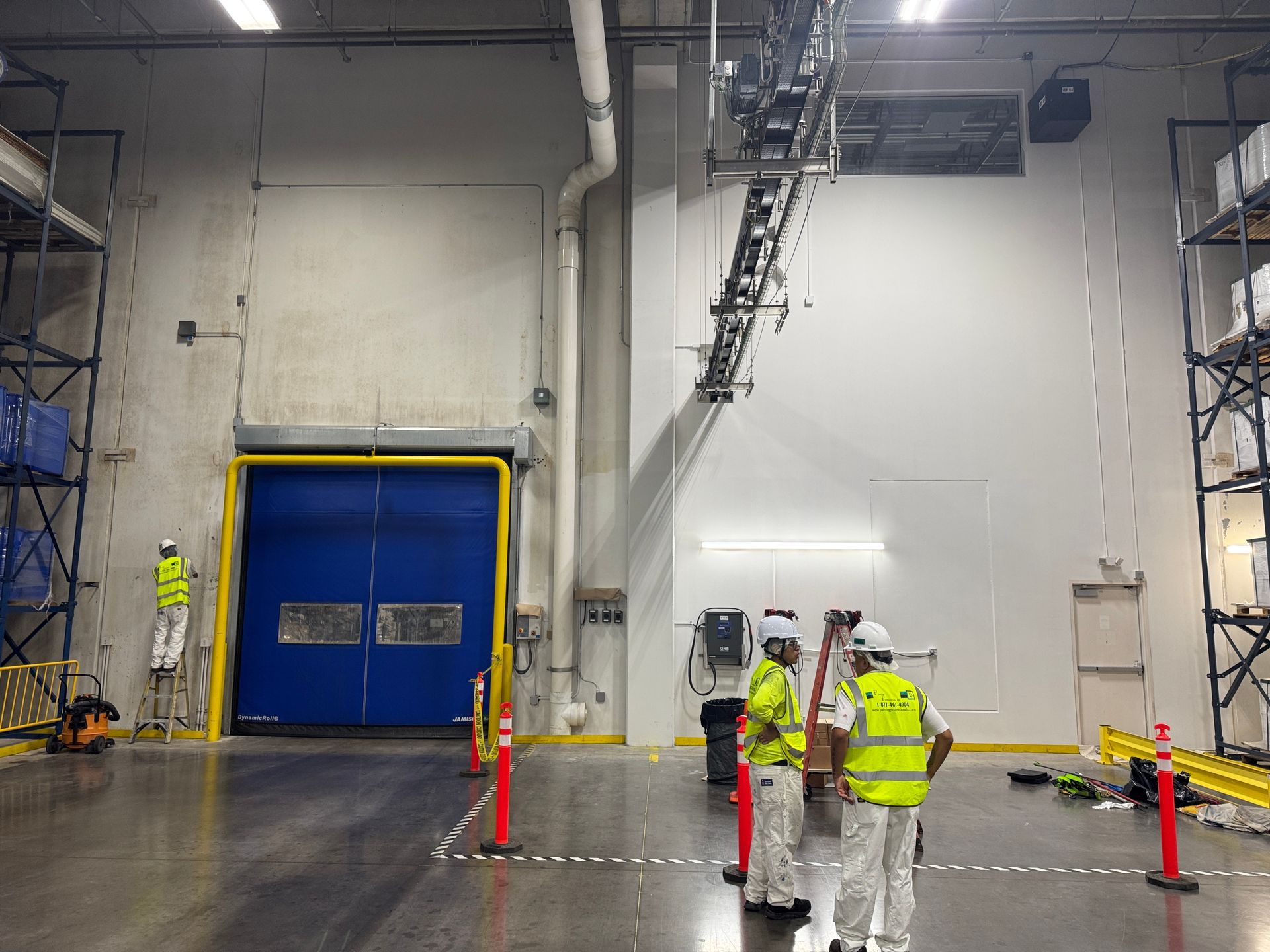
Preparing to apply industrial wall coatings inside a Houston food storage warehouse.
October 16, 2026
Protect food storage facilities against moisture damage and microbial growth with specialized industrial coatings and surface treatments in Houston.